

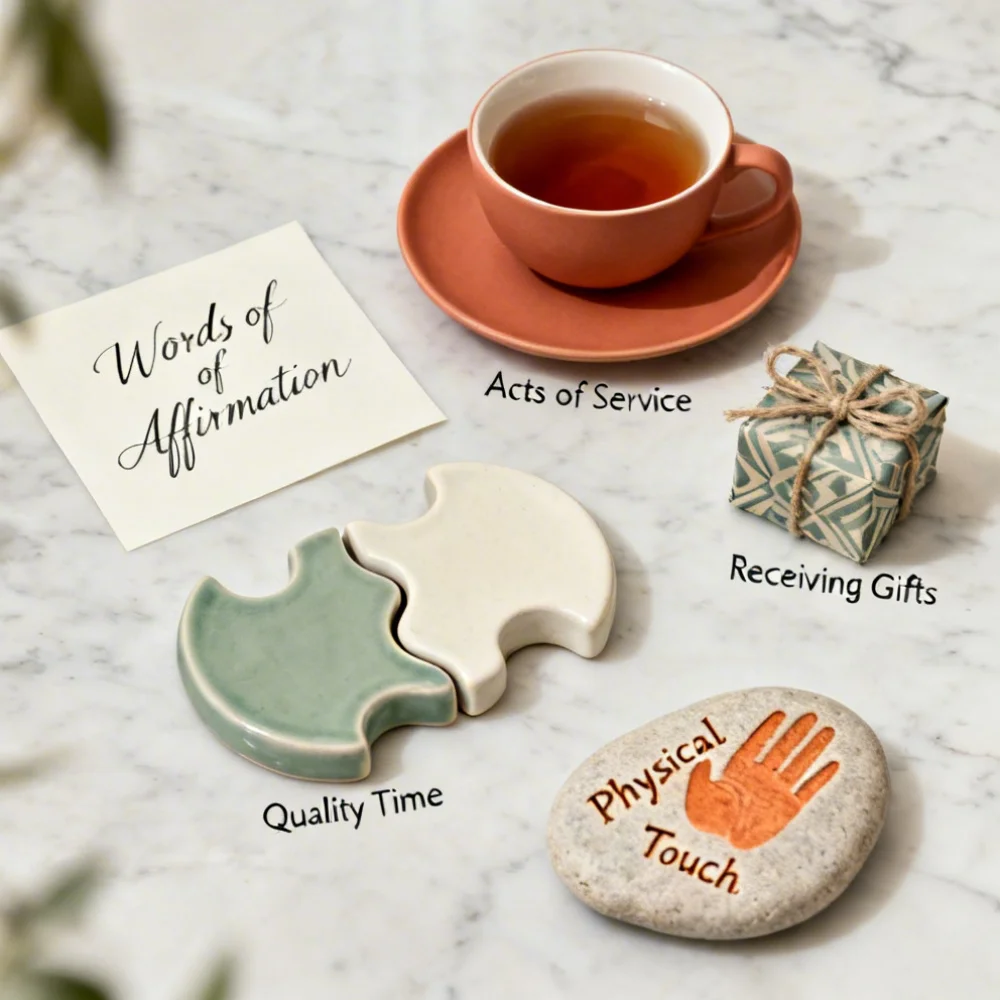
Have you ever felt deeply cared for by a partner's thoughtful gesture, while a friend's heartfelt compliment left you feeling a bit...underwhelmed? The concept of love languages offers a compelling framework for understanding these emotional mismatches, suggesting we all have preferred ways of giving and receiving affection. More than just a pop-psychology trend, this idea taps into fundamental questions about emotional connection and personal expression.
The Five Dialects of Devotion: A Modern Lexicon for Love
First introduced by counselor Gary Chapman in his 1992 book, the theory of love languages proposes five primary ways people express and experience love. Think of them less as rigid categories and more as emotional dialects. Words of Affirmation are verbal expressions of love, appreciation, and encouragement. For someone with this primary language, a simple "I'm proud of you" can feel like a warm embrace. Acts of Service involve doing helpful things for your partner, where actions truly speak louder than words—think making a meal when they're stressed or handling an errand without being asked. Receiving Gifts focuses on the thoughtfulness and effort behind a tangible token, not its monetary value. A meaningful gift is a physical symbol of love and remembrance. Quality Time is about giving someone your undivided attention, where the presence is the present. Finally, Physical Touch encompasses non-sexual affection like holding hands, hugs, or a reassuring pat on the back, where connection is felt literally through contact.
Why Your Love Language Isn't Just a Preference
Why might someone inherently value a home-cooked meal over a love letter? Research from attachment theory and developmental psychology suggests our early experiences can shape our emotional "blueprints." A child who felt most secure when a parent spent focused, uninterrupted time with them might grow to prioritize Quality Time. Conversely, someone who received frequent verbal praise for achievements might associate love with Words of Affirmation. It's not that the other languages are meaningless, but our primary one often acts as an emotional shortcut to feeling deeply seen and secure. This isn't about blaming upbringing, but about understanding the origins of our emotional vocabulary to foster greater self-awareness.
What Research Says About Emotional Expression
While Chapman's original framework wasn't born from academic research, subsequent studies in social and personality psychology have explored related concepts. Research on "perceived partner responsiveness"—the feeling that a partner understands, validates, and cares for you—suggests that when we express care in a way our partner inherently values, it significantly boosts this perception. Other studies on symbolic communication in relationships indicate that partners often develop unique "rituals" and "tokens" of affection, which aligns with the personalized nature of gifts and acts of service. However, experts caution against viewing the five languages as a complete or rigid science. Many researchers emphasize that relationship satisfaction is multifaceted, influenced by communication skills, conflict resolution, and shared values, not solely by "speaking" a partner's love language. The framework is best seen as a helpful tool for insight, not a diagnostic manual for relationship health.
The Pitfalls of Miscommunication and Mismatch
The most common friction arises not from a lack of love, but from a mismatch in emotional expression. You might be diligently expressing love through your primary language (constantly offering help—Acts of Service), while your partner, whose language is Words of Affirmation, is left feeling unappreciated because they rarely hear it directly. This is the "love language gap." Another pitfall is assuming your own primary language is universal, leading you to interpret your partner's different expressions as insufficient or uncaring. For instance, if your language is Physical Touch, a partner who shows love by planning detailed dates (Quality Time) might seem distant, when they are actually investing significant effort. Recognizing these gaps as differences in dialect, rather than deficits in care, is the first step toward bridging them.
Beyond the Couple: Love Languages in Friendships and Family
This framework isn't exclusive to romantic partnerships. Understanding relational styles can illuminate all close bonds. A friend whose language is Quality Time might feel hurt by last-minute cancellations, while a sibling who values Acts of Service might feel most loved when you help them move apartments. Even in parent-child relationships, a teen who craves Words of Affirmation might dismiss a parent's constant driving (Acts of Service) as mere obligation. Applying this lens platonically encourages a more nuanced appreciation for how the people in our lives, across all relationships, uniquely give and wish to receive care.
Putting It Into Practice: From Insight to Action
So, how can you use this insight constructively? First, focus on observation and curiosity, not assumption. Notice what expressions of care you naturally gravitate toward giving and what gestures from others make you feel most cherished. Have open, non-accusatory conversations with important people in your life about what makes them feel valued. The goal isn't to perfectly "perform" a language, but to expand your emotional repertoire. Try a "love language challenge": for a week, consciously express care to someone using their preferred language, not yours. The real power lies in the intentional effort to understand and connect, transforming insight into a tangible gesture of care that resonates on a deeper frequency.