

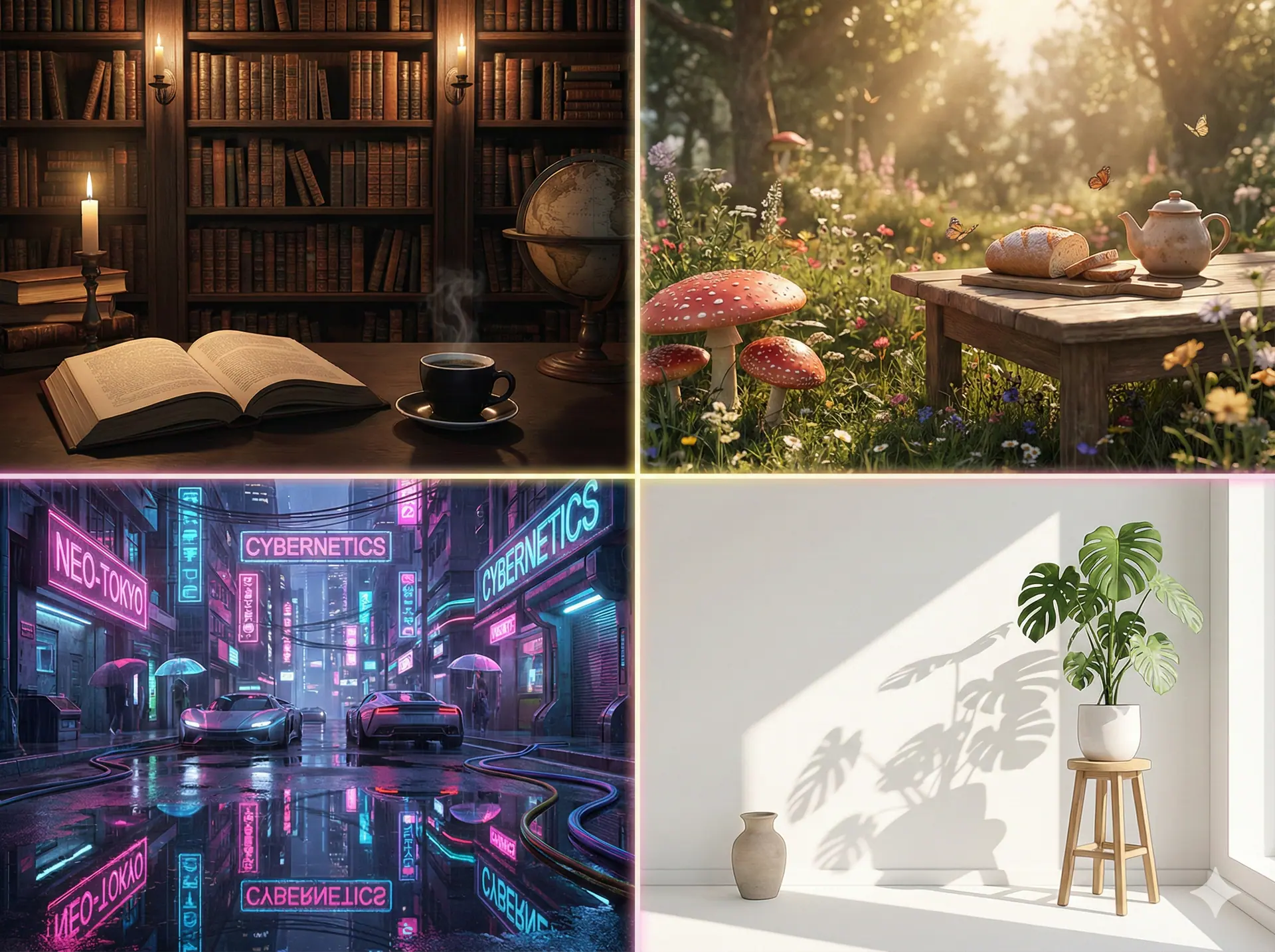
We no longer just wear clothes or decorate our rooms; we curate "vibes."
If you spend any time on TikTok, Instagram, or Pinterest, you know exactly what this means. The internet has fractured into hundreds of distinct visual subcultures, often ending in the suffix "-core." You aren’t just wearing a sweater; you are participating in Cottagecore. You aren’t just reading a book; you are embodying Dark Academia.
But why are we so obsessed with categorizing our lives into these highly specific visual filters?
Psychologists suggest that in an era defined by global instability, climate anxiety, and digital overload, adopting an "aesthetic" is a powerful coping mechanism. It is a form of world-building. When the real world feels chaotic and entirely out of your control, curating your personal environment into a cohesive, romanticized aesthetic gives you a sense of agency and identity.
Your favorite aesthetic isn't just about what looks good to your eye—it’s a visual representation of the emotional sanctuary you are desperately trying to build.
Let’s decode the psychology behind the four most dominant internet aesthetics. What is your chosen "Core" trying to protect you from?
1. Dark Academia: The Romantic Intellectual
The Visuals: Tweed blazers, Gothic architecture, vintage poetry books, black coffee, flickering candles, and a perpetual mood of autumn.
The Inner Monologue: The modern world is shallow and fleeting. Only art, literature, and history hold true meaning.
Dark Academia is an obsession with classic literature, the pursuit of self-discovery, and a general passion for knowledge. It romanticizes the life of a 19th-century scholar studying secretly in a dusty library at midnight.
The Psychological Translation: If you are drawn to Dark Academia, you are likely highly introspective and perhaps harbor a touch of existential dread. You crave depth in a world that often rewards superficiality. Psychologically, this aesthetic is a rebellion against the mindless scrolling of the digital age. By surrounding yourself with old, physical things (leather-bound books, classical music), you are trying to anchor yourself to history. Your challenge is making sure your love for the past doesn't turn into isolating melancholy.
2. Cottagecore: The Nostalgic Escapist
The Visuals: Flowing linen dresses, overgrown gardens, baking sourdough bread from scratch, wild mushrooms, and sipping tea in a sunlit kitchen.
The Inner Monologue: I reject the hustle culture. I just want to live softly, bake pies, and be left alone by capitalism.
Cottagecore exploded in popularity during the pandemic lockdowns. It is the absolute idealization of rural, agricultural life, stripped of all its actual hardships. It’s a fairy tale of self-sufficiency.
The Psychological Translation: Cottagecore is a trauma response to modern burnout. If this is your sanctuary, your nervous system is likely exhausted. You are tired of being "productive," tired of answering emails, and tired of the relentless pressure of urban life. Craving Cottagecore means you are seeking profound psychological safety, softness, and a return to "simpler times." It is a visual rejection of corporate ambition. You want to nurture things (plants, pets, sourdough starters) because you desperately want to be nurtured yourself.
3. Cyberpunk / Y2K: The Neon Rebel
The Visuals: Neon lights, metallic clothing, glitch art, matrix-style sunglasses, futuristic cities, and a hyper-digital, slightly dystopian edge.
The Inner Monologue: The future is a beautiful, terrifying mess, and I am going to surf the chaos.
This aesthetic oscillates between the nostalgic, optimistic tech-boom of the early 2000s (Y2K) and the gritty, high-tech/low-life reality of Cyberpunk. It is loud, unapologetic, and entirely synthetic.
The Psychological Translation: If you gravitate toward the neon grit of Cyberpunk or the hyper-pop energy of Y2K, you process anxiety through adaptation. Instead of running away to a cabin in the woods (like Cottagecore), you run directly into the machine. This aesthetic often appeals to people who feel like outsiders or rebels. You use fashion and technology as a form of armor. You accept that the world is chaotic and perhaps a bit broken, but you find beauty in the rebellion. You value extreme individualism and unapologetic self-expression.
4. The "Clean Girl" / Minimalist: The Control Seeker
The Visuals: Slicked-back hair, glowing skin, perfectly neutral beige and white apartments, matcha lattes, and a highly structured morning routine.
The Inner Monologue: If my environment is perfectly organized, my mind will be perfectly calm.
This aesthetic is all about effortless perfection. It promotes a lifestyle of wellness, extreme cleanliness, and visual quietness. There is no clutter, no loud colors, and no mess.
The Psychological Translation: Minimalist aesthetics are fundamentally about regaining control. When your internal emotional state feels messy, or when your career feels unpredictable, organizing your physical space into a pristine, neutral-toned sanctuary is deeply soothing. If you are obsessed with the "Clean" aesthetic, you are using external order to manufacture internal peace. However, the shadow side of this aesthetic is perfectionism. Your challenge is learning to accept that life is inherently messy, and a stain on your white rug is not a failure of your character.
Conclusion: What is Your Soul's Filter?
We are all just trying to make the world a little more beautiful and a lot more bearable.
Whether you are hiding in a Gothic library, baking bread in a forest, hacking the mainframe in neon, or organizing your life into beige folders, your aesthetic is your emotional armor. It tells the world who you are without you having to speak a single word.
So, what world does your subconscious actually want to live in?