

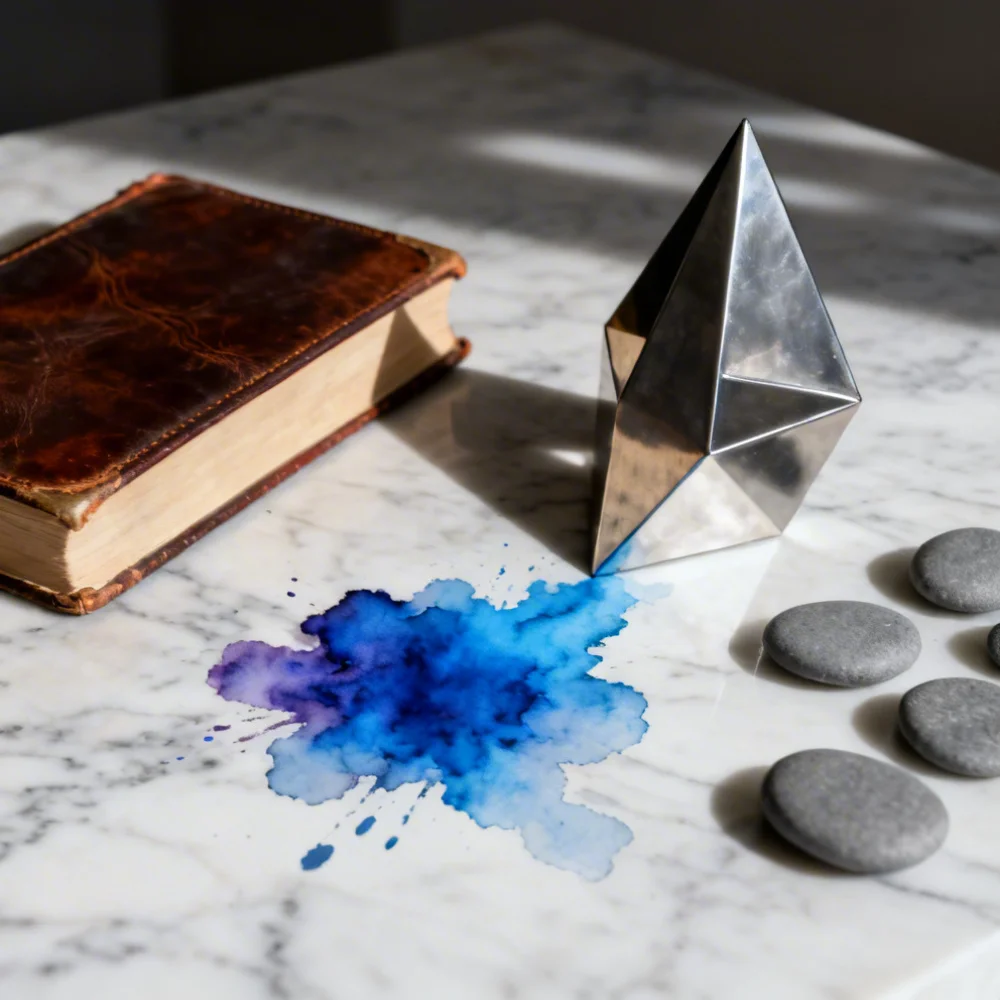
Ever scrolled through a "dark academia" mood board and felt a deep, inexplicable kinship? Or maybe a clean, minimalist feed just feels right to your soul. Welcome to the world of MBTI aesthetics, where personality theory meets visual vibes. It's the idea that your Myers-Briggs type might not just describe how you think, but also what you find beautiful, inspiring, and fundamentally "you." But is this just another fun internet trend, or does it point to something deeper about how we express our inner selves?
What Exactly Are MBTI Aesthetics?
At its core, an MBTI aesthetic is a curated visual style or thematic vibe that's popularly associated with a specific personality type. Think of it as a personality's Pinterest board. For instance, INFJs might be linked with ethereal, mystical visuals and deep symbolism, while ESTPs could be connected to bold, high-energy, and adventurous imagery. This concept has exploded on platforms like TikTok and Instagram, where users create content that bundles personality insights with fashion, interior design, art, and overall lifestyle preferences. It's a way to translate abstract cognitive functions—like Introverted Intuition or Extraverted Sensing—into a tangible, shareable visual language. While the MBTI framework describes mental processes, the aesthetic trend explores how those processes might manifest in our external world and creative tastes.
The Psychology of Visual Identity
Why are we so drawn to categorizing our visual preferences? Research suggests that humans have a fundamental need to create and communicate identity. The clothes we wear, the art we hang, and the spaces we inhabit are all forms of non-verbal communication. They signal our values, our moods, and even our aspirational selves to the world. The MBTI aesthetic trend taps directly into this, offering a pre-framed narrative for our self-expression. It provides a shortcut to answering the perennial question, "What's my style?" by linking it to a perceived core identity. Furthermore, studies on personality and environmental preference indicate that certain traits correlate with aesthetic choices; for example, openness to experience is strongly linked to a preference for complex and unconventional art. So, while the specific pairing of, say, an INTP with a "cyberpunk academia" look isn't scientifically validated, the underlying principle—that personality influences aesthetic attraction—has some footing in psychological research.
What Research Says About Personality and Preference
It's crucial to approach the MBTI aesthetics phenomenon with a balanced perspective. The Myers-Briggs Type Indicator itself is a tool based on Carl Jung's theories, and while it's widely used for career and team-building, its scientific rigor is debated among psychologists. However, the broader field of personality psychology offers relevant insights. The Five-Factor Model (or "Big Five") traits have been studied extensively in relation to preferences. Research consistently suggests that individuals high in Openness tend to prefer abstract, complex, and novel art and music. Those high in Conscientiousness often lean toward organized, clean, and conventional styles. Extraversion has been linked to a preference for vibrant, energetic, and socially engaging environments. While these are broad correlations and not deterministic rules, they indicate that the link between who we are and what we like isn't random. The MBTI aesthetics trend, in its own pop-culture way, is attempting to map a similar territory, using a different personality lexicon.
Beyond the Stereotype: Using Aesthetics as a Tool, Not a Cage
Here's where we get to the important part. The risk of any trend like this is that it can become a box. You might be an ENFP who doesn't resonate with the typical "whimsical cottagecore" aesthetic, and that's perfectly okay—more than okay, it's expected. Human beings are complex and cannot be fully captured by 16 types or their associated mood boards. The real value in exploring personality-based aesthetics isn't in finding a rigid uniform to adopt, but in using it as a mirror for self-reflection. Ask yourself: Which parts of my type's common aesthetic truly resonate with me? What parts feel completely off? This inquiry can be surprisingly revealing. It might help you pinpoint which of your cognitive functions are most dominant in your expression, or it might highlight a side of your personality you wish to explore more. The aesthetic isn't the destination; it's a starting point for a deeper conversation with yourself about what authenticity looks and feels like for you.
A Practical Guide to Curating Your Authentic Vibe
So, how can you engage with this trend in a healthy, productive way? First, treat it as inspiration, not instruction. Browse those "INTJ aesthetic" videos or "ESFP mood boards" with curiosity. Save the images, colors, or themes that spark a genuine "yes!" inside you, and ignore the rest. Second, conduct a personal audit. Look at your physical and digital spaces—your room, your wardrobe, your phone wallpaper. What patterns do you see? Do they align with how you see yourself? Third, give yourself permission to be eclectic. You are not one thing. Your aesthetic can be a fusion, a unique blend that reflects all your facets. Maybe it's 70% of your type's common vibe mixed with 30% of something that seems contradictory. That contradiction is often where the most interesting self-expression lives. Finally, remember that aesthetics are fluid. What feels like "you" today might evolve in five years as you grow and change, and that's a beautiful thing.
Exploring MBTI aesthetics can be a fun, creative, and surprisingly insightful journey into self-understanding. It connects the dots between our inner psychological landscape and the outer world we create. Just remember, you are the artist of your own life. The personality type might suggest the genre, but you hold the brush, choose the palette, and make the masterpiece uniquely yours. So, go ahead—explore the visuals, play with the themes, but always let your genuine feeling be the final guide. After all, the most compelling aesthetic is the one that feels like home.