

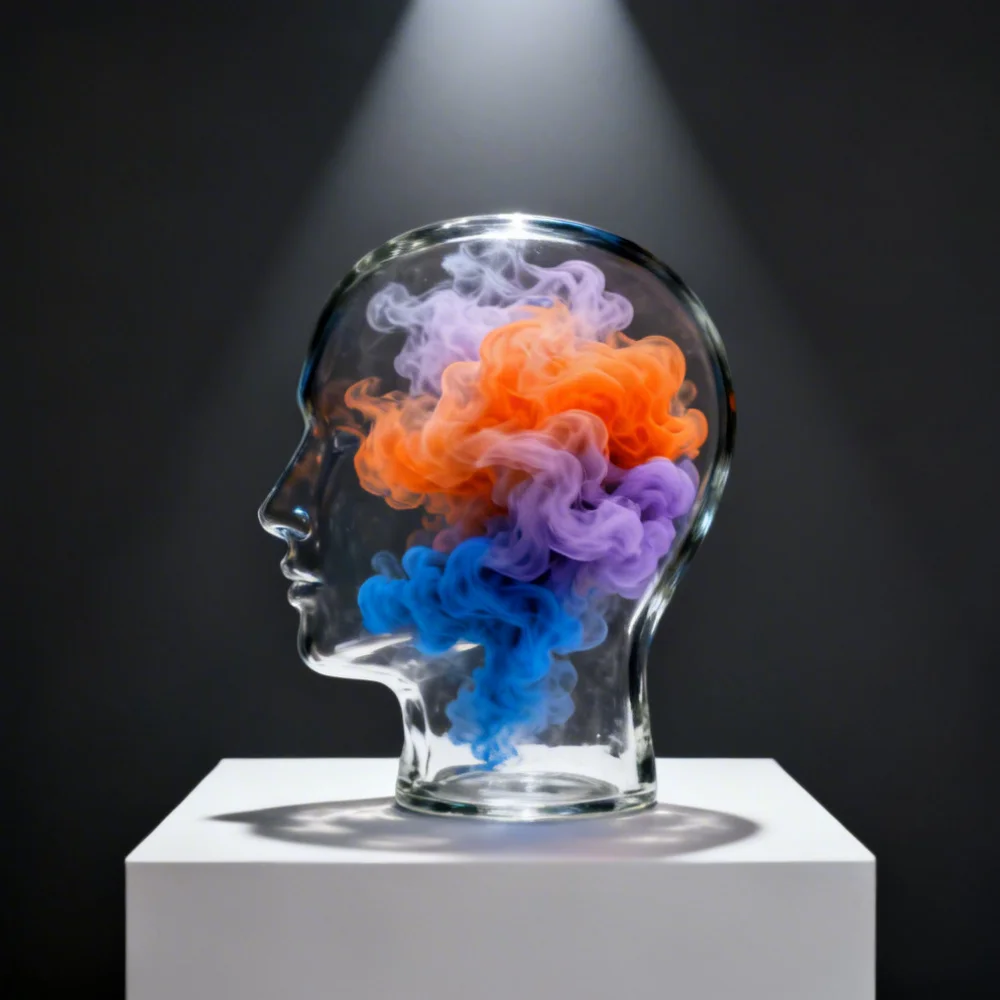
Ever feel like you're on autopilot in your own life, reacting instead of responding? That's your cue to explore emotional intelligence, the skill set that helps you understand and manage your feelings to create better outcomes. It's not about being "nice"; it's about being effective, authentic, and resilient. This guide tackles the real questions you're asking yourself, offering a roadmap to greater self-awareness and healthier connections.
Why do I always feel misunderstood in conversations?
You're not alone. This common frustration often stems from a gap in emotional awareness, a core component of emotional intelligence. You might be communicating your thoughts clearly, but missing the emotional subtext you're also broadcasting. Research suggests that a huge portion of communication is non-verbal—tone, pace, body language. When you say "I'm fine" with a tense jaw and crossed arms, the other person receives a mixed message. The disconnect happens because we often focus solely on the words we say, not the full emotional package we deliver. To bridge this gap, start practicing active listening. This means truly focusing on the other person, observing their non-verbal cues, and reflecting back what you hear ("So, it sounds like you felt frustrated when that happened..."). It also means getting curious about your own internal state before speaking. Ask yourself: "What am I actually feeling right now? Am I annoyed, hurt, or anxious?" Naming the emotion to yourself can help you choose how to express it more accurately. This self-regulation prevents emotional leakage—where unprocessed feelings seep out in unhelpful ways, leaving others confused. Building this aspect of your emotional skills isn't about becoming a mind reader; it's about becoming a better sender and receiver of the full human message.
Why do I get so overwhelmed by other people's moods?
If a coworker's bad vibe ruins your afternoon or a friend's anxiety becomes your own, you're likely experiencing high empathy without strong emotional boundaries. Empathy—the ability to sense and understand what others are feeling—is a superpower of social awareness. But without boundaries, it can feel like a curse. You might be absorbing emotions without the filter to separate "theirs" from "mine." Studies indicate that some people have naturally more reactive mirror neurons, making them more physiologically tuned in to the emotions around them. The key to managing this isn't to shut down your empathy, but to build your emotional resilience. Start by physically checking in. When you feel a mood shift after interacting with someone, pause. Place a hand on your chest and ask, "Is this feeling mine? Did I feel this way before the interaction?" This simple somatic practice can create crucial psychological distance. Next, practice compassionate detachment. You can acknowledge someone's struggle ("That sounds really difficult") without taking responsibility for fixing their emotional state. Your role is to be supportive, not a sponge. Strengthening your own emotional core through self-care practices like mindfulness or journaling can also make you less porous to external emotional chaos. Think of it as fortifying your own house so you can be a good neighbor during a storm, without your floors getting wet.
Why do my emotions feel like they control me?
That moment when anger flares, anxiety spirals, or sadness swallows you whole can make you feel powerless. This experience highlights the difference between feeling an emotion and being hijacked by it. Emotional intelligence development is centered on moving from hijack to management. The hijack happens in our brain's amygdala, the alarm system that triggers a fast, survival-based reaction before our rational prefrontal cortex can catch up. The goal isn't to stop the emotion—that's impossible and unhealthy—but to widen the space between the trigger and your response. This is where emotional regulation comes in. First, practice labeling without judging. Instead of "I'm so stupid for getting this anxious," try "I'm noticing anxiety." This depersonalizes the wave of feeling. Next, develop a "pause and insert" ritual. It could be taking three deep breaths, counting to ten, or physically stepping away. This ritual buys time for your thinking brain to engage. In that space, you can ask empowering questions: "What do I need right now?" or "What's the most constructive action I can take?" Over time, this practice rewires your neural pathways, strengthening your ability to choose your response. You stop being a passenger in your emotional life and start becoming the skilled driver, navigating the terrain with more intention and less collision.
Why is it so hard for me to understand what I'm really feeling?
You might have a vague sense of being "off" or "stressed," but pinpointing the specific emotion feels like trying to name a color you've never seen. This is emotional granularity, and low granularity is a major roadblock to personal growth. If you can only identify "bad," you only have one tool to fix it. But if you can distinguish disappointment from loneliness, or overwhelm from shame, you can address the real need. Many experts believe this lack of clarity often stems from childhood environments where certain feelings were discouraged ("Don't be sad," "Big kids don't get scared"). We learn to mute or blur our emotional palette. To rebuild this skill, become an emotion scientist. Keep a simple feelings log. Several times a day, stop and consult an emotions wheel (easily found online). Don't just go for the basics in the center; push yourself to the outer edges. Are you feeling... resentful? Melancholic? Anticipatory? Grateful? Journal about the physical sensations that accompany the feeling. Does anxiety feel like a knot in your stomach or static in your chest? This process of linking sensation to label builds your internal dictionary. Furthermore, engaging with art—music, films, books—and asking "What emotion is the artist conveying here?" can sharpen your external recognition, which in turn improves internal awareness. It's a practice of translating the wordless language of your body and mind into a dialogue you can understand and work with.
How can I use my emotions to actually make better decisions?
The old idea of "don't let your emotions cloud your judgment" is incomplete. Research in the field of emotional cognition suggests our feelings are not noise; they are data. High emotional intelligence involves integrating this data, not ignoring it. Your emotions are a summary of your past experiences, values, and needs, delivered at lightning speed. The trick is to consult them, not obey them blindly. When facing a decision, big or small, first acknowledge your emotional data. Are you feeling fearful? That fear might be highlighting a genuine risk you need to plan for. Are you feeling a surge of excitement? That excitement could be pointing you toward an opportunity that aligns with your passions. The next step is to cross-reference this emotional data with rational analysis. Ask: "What is this emotion telling me? What underlying need or value is it connected to? Is this feeling based on the current reality or an old story?" For example, anxiety about a public speech is data that you care about doing well. The intelligent response isn't to cancel (obeying the anxiety) or to ignore the shaky hands (ignoring the data). It's to prepare thoroughly and practice calming techniques—addressing the need for competence and security the emotion revealed. By treating emotions as strategic advisors rather than commanders or enemies, you make holistic choices that honor both your logical goals and your human experience. This is the ultimate application of emotional skills: using the full spectrum of your intelligence to navigate your world with wisdom.
Building your emotional intelligence isn't a destination; it's a practice of showing up for yourself with curiosity instead of criticism. It's the work of translating your inner world from a confusing static into a clear signal you can use. Start small. Tonight, simply ask yourself: "What was one emotion I felt today, and what was it trying to tell me?" That single question is the first step on the path from reacting to your life, to consciously creating it.