

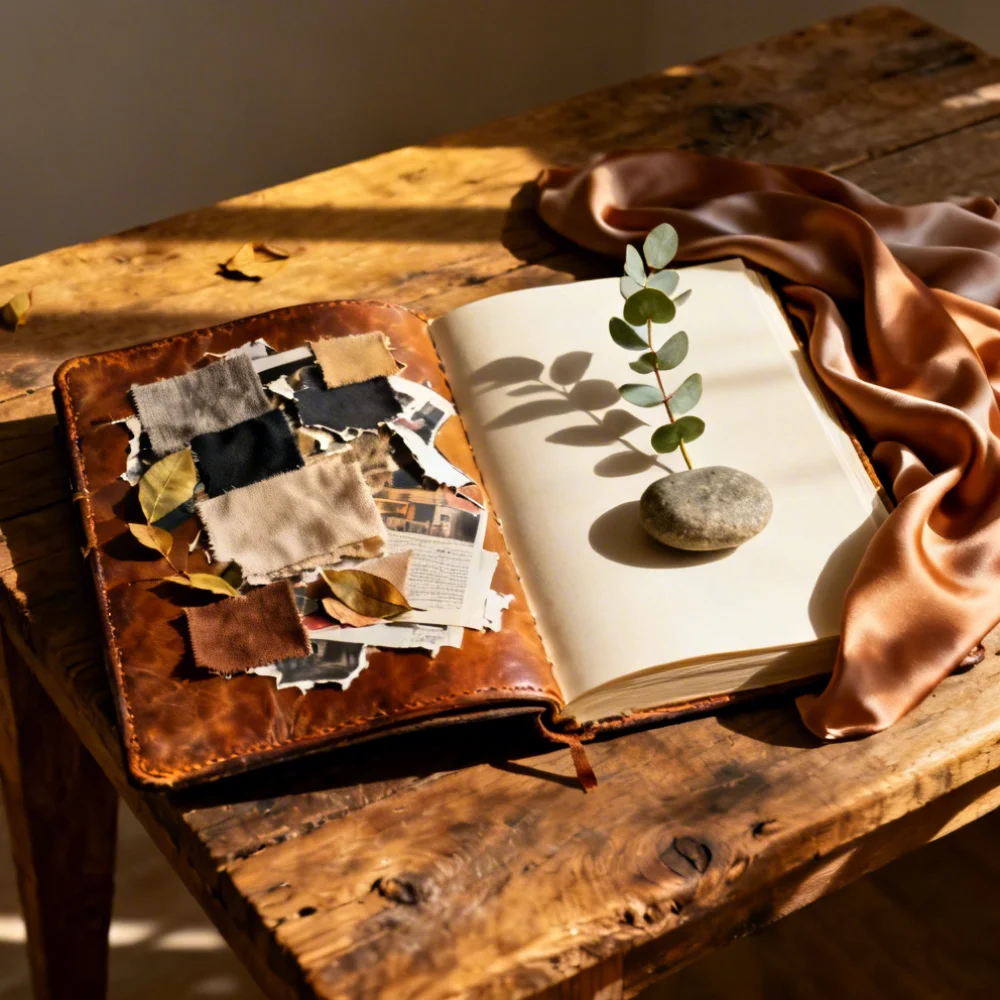
Ever feel like your personal style is a chaotic mood board, while your inner world feels just as disconnected? You're not just decorating a room or curating a wardrobe—you're searching for your aesthetic personality, a cohesive visual language that makes your external world feel like a true home for your internal self. This journey from fragmentation to harmony isn't about trends; it's a powerful form of self-discovery.
The Before: The Scattered Mood Board Syndrome
Your Pinterest is a masterpiece of contradiction. One board screams "dark academia," filled with leather-bound books and tweed, while another radiates "coastal grandma" with linen and seashells. Your closet is a time capsule of every "you" you've tried on, and your living space feels like a showroom for personalities you haven't fully met. This isn't a lack of taste—it's a sign of a rich, multifaceted self, but one that hasn't yet found its unifying thread. The result? A subtle but constant background noise of dissonance, where nothing quite feels like "you," leaving you feeling ungrounded and perpetually shopping for an identity that feels just out of reach.
Why We Get Stuck in Aesthetic Limbo
This state of aesthetic flux isn't random. Research suggests our external environments profoundly impact our psychological well-being. When our surroundings feel incongruent with our internal state, it can create cognitive dissonance—a mental discomfort that arises from holding conflicting beliefs, values, or, in this case, self-perceptions versus self-presentation. Many experts in environmental psychology believe our spaces act as an extension of our identity. When that extension is fragmented, it can subtly undermine our sense of authenticity and coherence. Furthermore, in a digital age saturated with infinite visual inspiration, the pressure to curate a "perfect" aesthetic can lead to decision fatigue and a fear of commitment, trapping us in a cycle of consumption without true connection to the items or styles we bring into our lives.
The Core of an Aesthetic Personality: More Than a Vibe
Moving beyond scattered inspiration requires understanding what an aesthetic personality truly is. It's not a rigid box or a label to fit into. Think of it as your personal visual dialect. It's the recurring notes, textures, colors, and forms that you are intrinsically drawn to, which, when woven together, create a consistent sensory experience that feels authentically you. This isn't about minimalism versus maximalism; it's about intentionality. Studies indicate that engaging in authentic self-expression, including through our environment and appearance, can be linked to increased feelings of autonomy and well-being. Your aesthetic personality is the bridge between your inner values—like your need for calm, your love of discovery, or your playful spirit—and the tangible world you interact with every day.
The Archeology of You: Mining for Your Authentic Patterns
The transformation begins not with buying, but with digging. This is the actionable work of becoming a detective of your own desires. Start a "resonance journal." For one week, don't pin or save anything new. Instead, review your existing saved images, your wardrobe, and your space. Without judgment, ask: What items or images give me a genuine sense of calm, joy, or energy when I look at or use them? What are the common denominators? Is it a material like worn wood or cool marble? A color palette of muted earth tones or clear, bright hues? A feeling of openness or cozy containment? This process isn't about naming a style (yet); it's about identifying sensory and emotional triggers. Look for patterns in your non-visual life, too. The music you love, the stories you gravitate toward, even the way you prefer to spend a Saturday—all hold clues to the aesthetic principles that resonate with your core self.
From Chaos to Cohesion: Curating Your World with Intention
With your patterns identified, the shift begins. This is where you move from passive collector to active curator. Start small. Choose one micro-environment to align: your phone's home screen, your work desk, or a single shelf. Apply one of your core patterns—perhaps a color scheme or a texture rule—to just that space. The goal isn't perfection, but practice. Next, apply the "one-in, one-out" rule with a new filter: does this new potential purchase align with my identified aesthetic principles? This creates mindful consumption. As you practice, your aesthetic personality will begin to crystallize not as a limitation, but as a clarifying lens. It makes choices easier and your environment feel more harmonious. Your external world stops fighting your internal one and starts reflecting it, creating a powerful feedback loop of authenticity.
The After: Living in Your Aesthetic Skin
Imagine opening your closet and feeling a sense of calm clarity because everything in it feels like a part of a whole story—your story. Your living space isn't just "decorated;" it feels like a sanctuary that actively supports your mood and mindset. Choosing what to wear, buy, or display becomes an intuitive act of self-expression rather than a stressful decision. This is the power of a realized aesthetic personality. It's the end of searching for yourself in trends and the beginning of building a world that is uniquely, sustainably yours. The dissonance fades, replaced by a deep-seated sense of being at home wherever you are, because you've built that home from the inside out.
The journey to uncovering your aesthetic personality is ultimately a journey back to yourself. It's a practice of listening to your deepest preferences and having the courage to honor them in the physical world. It won't happen overnight, and it will evolve as you do. But each intentional choice is a brick in the foundation of a life that doesn't just look good, but feels profoundly right. Start your archeology today. What is one pattern you can identify in the things that bring you the most peace?