

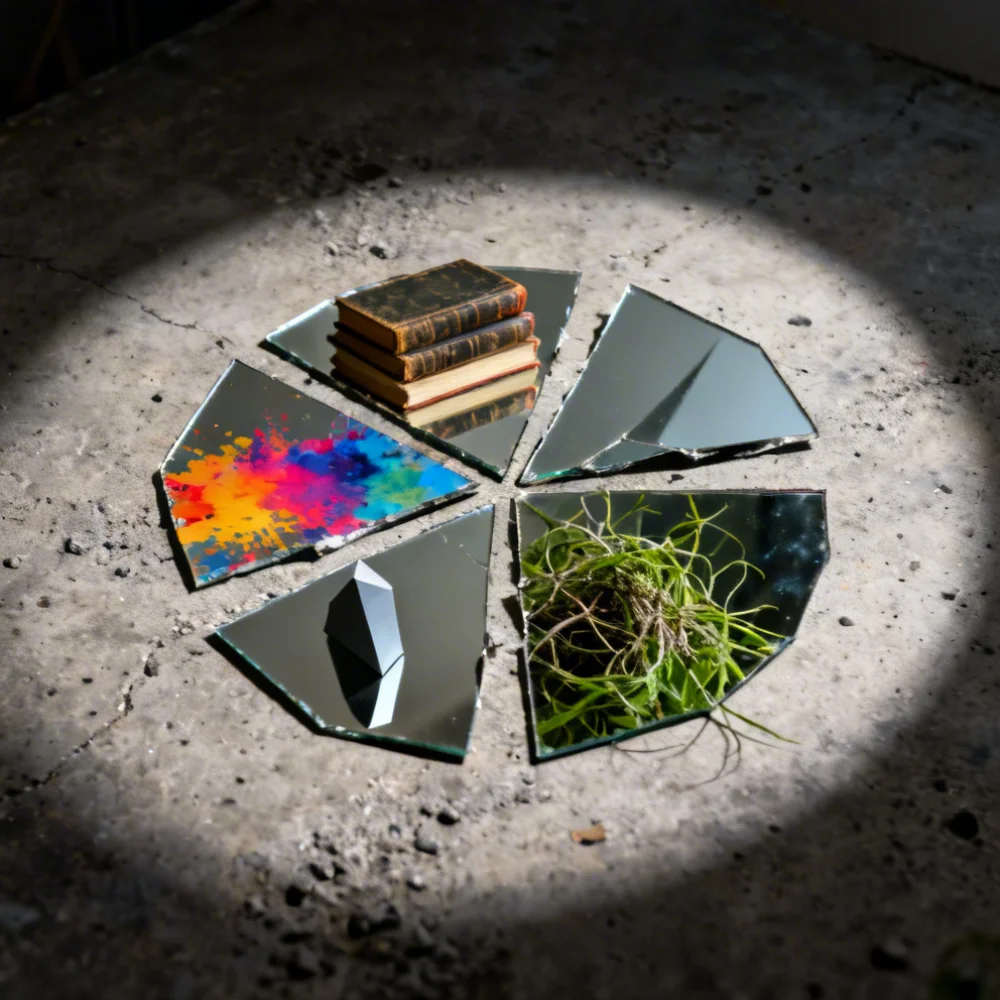
Let's be real: the internet's obsession with MBTI aesthetics is often dismissed as just another fleeting trend, a way to make your Pinterest board look cohesive. But what if scrolling through those "INFJ moodboards" or "ENTP core" videos is actually a surprisingly valid form of modern self-exploration? The curated visuals, colors, and vibes associated with each personality type might be doing more for our self-understanding than we give them credit for. It's not just about looking cool; it's about seeing a reflection of your cognitive patterns in a visual language.
The Visual Language of the Unconscious
Think of your personality not as a static label, but as a unique operating system for how you perceive the world and make decisions. Research in cognitive psychology suggests we all have preferred mental pathways. The Myers-Briggs framework, for all its debated scientific rigor, attempts to map these preferences. So, when someone gravitates toward the dark academia aesthetic for an INTJ or the vibrant, chaotic collage style for an ENFP, they're often intuitively externalizing an internal process. The clean lines and minimalist palette of an "ISTJ aesthetic" might visually represent a preference for order, clarity, and tradition, core elements of that cognitive style. This isn't about putting people in boxes; it's about using visual metaphor to articulate the often-abstract feeling of how one's mind works.
Beyond Stereotypes: Aesthetics as Cognitive Comfort
Critics argue that personality type visuals promote harmful stereotypes. But the key is in the curation, not the prescription. A healthy engagement with these aesthetics isn't about conforming to a checklist ("I'm an INFP, so I must love fairy lights and poetry journals"). Instead, it can be about resonance. Seeing a collection of images that evoke a sense of "home" for your psyche can be validating. It answers a subtle human question: "Does anyone else see the world this way?" The curated mood, whether it's the adventurous, earthy feel of an SP type or the futuristic, conceptual vibe of an NT, can provide a sense of cognitive belonging. It's a way of saying, "My internal landscape has an external echo."
The Algorithm of Identity: How Social Media Feeds Our Search
This phenomenon is turbocharged by the very structure of platforms like TikTok and Instagram. Algorithms learn that you engaged with content about introversion or intuition, and they serve you more of it, creating a personalized feed of type-coded imagery. This creates a feedback loop of identity exploration. You see a aesthetic that resonates, you learn it's linked to a cognitive function like Introverted Feeling (Fi) or Extraverted Sensing (Se), and you start to notice those patterns in your own life. It becomes a tool for self-observation. The risk, of course, is mistaking the aesthetic for the entirety of the identity, or using it to avoid the messy, complex work of actual self-knowledge. But when used as a starting point for reflection, it can be remarkably effective.
From Aesthetic to Action: The Real Payoff
The true value of engaging with MBTI aesthetics isn't in achieving a perfectly curated feed. It's in the translation from visual inspiration to personal insight. That dark, stormy "INFJ aesthetic" might clue you into your own depth of processing and need for meaningful connection. The bright, eclectic "ESFP moodboard" could highlight your innate desire for spontaneous experience and sensory engagement. This awareness is the first step toward self-regulation and growth. Understanding that you are drained by chaotic visuals (and might need more minimalist spaces) or energized by vibrant ones can inform everything from your workspace design to your social calendar. It turns passive scrolling into active self-care.
Your Aesthetic is a Question, Not an Answer
So, the next time you fall down a rabbit hole of MBTI aesthetics, don't write it off as mere escapism. See it as a modern, visual dialect in the ancient conversation of "Know Thyself." Let the colors, textures, and scenes that pull at you serve as clues. Ask yourself: What about this collection of images feels true to me? What does it say about what I find beautiful, calming, or stimulating? Your attraction to a certain visual world is a map pointing toward the territories of your own mind. The aesthetic isn't the destination; it's the compass. Use it to navigate the richer, more complex, and wonderfully uncategorizable reality of who you are becoming.