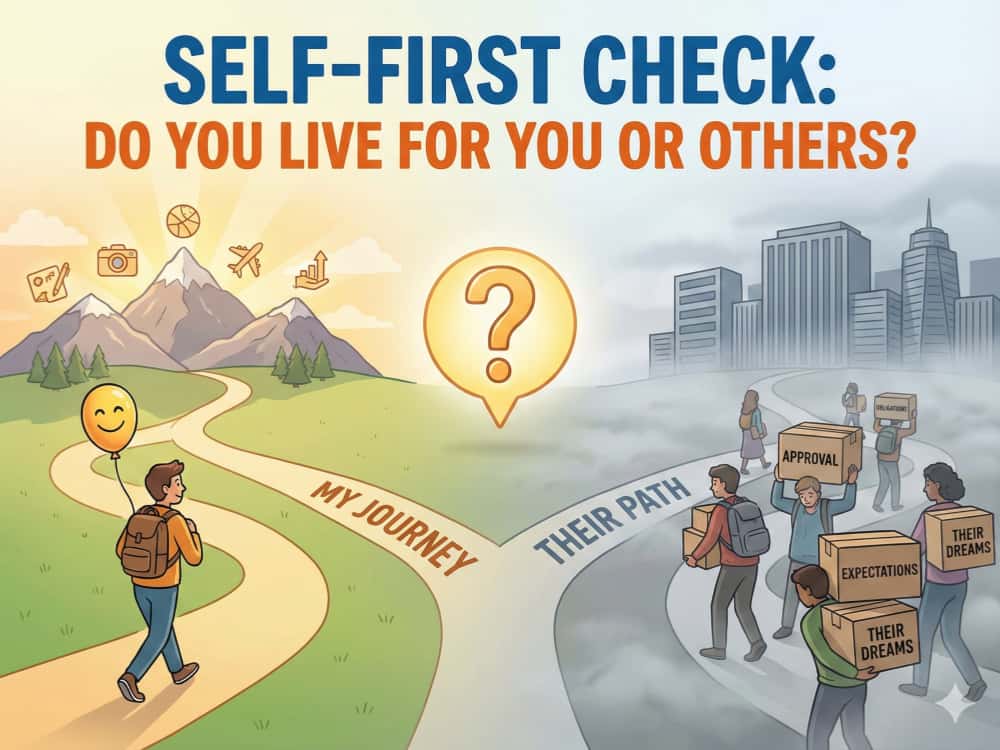
Ever feel like your personal space is a public park and your energy is the free Wi-Fi? You're not alone. Setting boundaries is the not-so-secret skill that can transform your relationships and your peace of mind, but it often feels like trying to build a fence in a hurricane. This isn't about building walls; it's about drawing a functional map of where you end and others begin. Let's explore some psychology-informed approaches to establishing healthy limits.
1. The "Why" Before the "How": Boundaries as Self-Preservation, Not Punishment
Let's clear something up right away: a boundary isn't a weapon you deploy when you're fed up. Research suggests that effective boundary-setting is a proactive form of self-care, not a reactive punishment. Think of it like the oxygen mask on a plane—you secure your own first so you can actually help others. When you constantly say "yes" to avoid discomfort, you're essentially saying "no" to your own needs, which can lead to resentment and burnout. Many experts believe that understanding your core values is the first step. What drains you? What energizes you? Your boundaries are simply the rules that protect those precious resources. It's less about being mean and more about being clear.
2. The Art of the "Clean No" (Without the Apology Tour)
Ah, the people-pleaser's kryptonite: the simple decline. We often feel the need to pad a "no" with a novel-length explanation, three alternative solutions, and a bouquet of apologies. This waters down the message and invites negotiation. Studies indicate that a clear, concise "no" is actually more respectful of everyone's time. You don't owe a forensic audit of your reasoning. Try: "I can't take that on right now," or "That doesn't work for me." It feels terrifying at first, like skipping a step on the stairs. But that silence afterward? That's the sound of your integrity settling in. It's not rude; it's direct. The goal isn't to be harsh, but to be so clear that there's no room for misunderstanding or guilt-tripping.
3. Spot the Guilt Trip: Emotional Accountability 101
Here's the tricky part: sometimes, when you start setting boundaries, other people's reactions can feel... intense. You might hear things like, "I guess you're just too busy for me now," or "Fine, I'll just do it all myself." This is where you learn to differentiate between someone's disappointment (a normal emotion) and emotional manipulation. A key principle in establishing limits is understanding that you are responsible for communicating your boundary kindly, but you are not responsible for how the other person feels about it. Their emotional response is their work to manage. You can be empathetic ("I understand this is disappointing") without capitulating. Holding the line here is crucial for healthy relationship dynamics.
4. Digital Fences: Managing Your Online Energy
Your need for personal limits doesn't magically disappear when you open an app. In many ways, defining your space is even more critical online. This can look like turning off notifications after 7 PM, not feeling obligated to respond to work messages on weekends, or muting that group chat that's a constant source of anxiety. It also means curating your feeds and being mindful of who has access to your emotional bandwidth via DMs. Think of it as creating a "no spam" filter for your soul. Setting these technological and social media parameters helps prevent the feeling that you're "on call" 24/7 for everyone's opinions and demands.
5. The Non-Negotiable: Identifying Your Deal-Breakers
Not all boundaries are created equal. Some are flexible (maybe you'll occasionally answer a quick text after hours for a close friend in crisis). Others should be ironclad. These are your non-negotiables—the behaviors or situations that fundamentally disrespect your values or well-being. For some, this might be not tolerating name-calling during a disagreement. For others, it could be refusing to lend money that puts your own finances at risk. Getting clear on your absolute limits is empowering. It means you've pre-decided what you will and won't accept, so you're not making high-stakes decisions in the heat of an emotionally charged moment. This clarity is a cornerstone of self-respect.
6. It's a Practice, Not a Perfection
You will mess up. You'll say "yes" when you meant "no," you'll let a guilt trip work, and you'll feel like you're back at square one. That's okay. Psychology tells us that building any new skill involves a learning curve. View boundary-setting as a muscle you're strengthening, not a test you're failing. Each attempt, whether successful or not, teaches you something about your needs and your communication style. The goal isn't to become an impenetrable fortress, but to become a person who can engage with others from a place of choice and authenticity, rather than obligation and fear. It's about creating relationships where you feel seen, not used.
So, where do you start? Try this simple reflection: What's one small, low-stakes limit you can set this week? Maybe it's not checking email for the first hour of the day, or telling a friend you need a day to think before committing to their plan. The act of defining your space, however tiny, is a powerful declaration that your needs matter. And that's a boundary worth building.