You've seen her everywhere: the dewy skin, the minimalist gold jewelry, the impossibly neat slicked-back bun. The "clean girl aesthetic" isn't just a trend; it's a full-blown cultural mood. But what does your sudden urge to organize your skincare fridge and wear only beige really say about your inner world? Let's psychoanalyze the vibe, from its aspirational calm to the subtle pressure hiding beneath that glossy lip oil.
1. The Allure of Control in a Chaotic World
At its core, the clean girl aesthetic is a masterclass in curated control. When your notifications are screaming and the world feels like a dumpster fire, there's a profound comfort in mastering the micro. Research in environmental psychology suggests that orderly, simplified spaces can reduce cognitive load and promote feelings of calm. Your perfectly arranged vanity with its three serums isn't just for the 'gram; it's a tiny, manageable kingdom where you are the undisputed ruler. The aesthetic becomes a visual mantra: if you can control the sheen on your cheekbone, perhaps you can manage the chaos of your inbox, your schedule, your life. It's a non-verbal declaration that, externally at least, you have your "stuff" together.
2. The Performance of Effortless Wellness
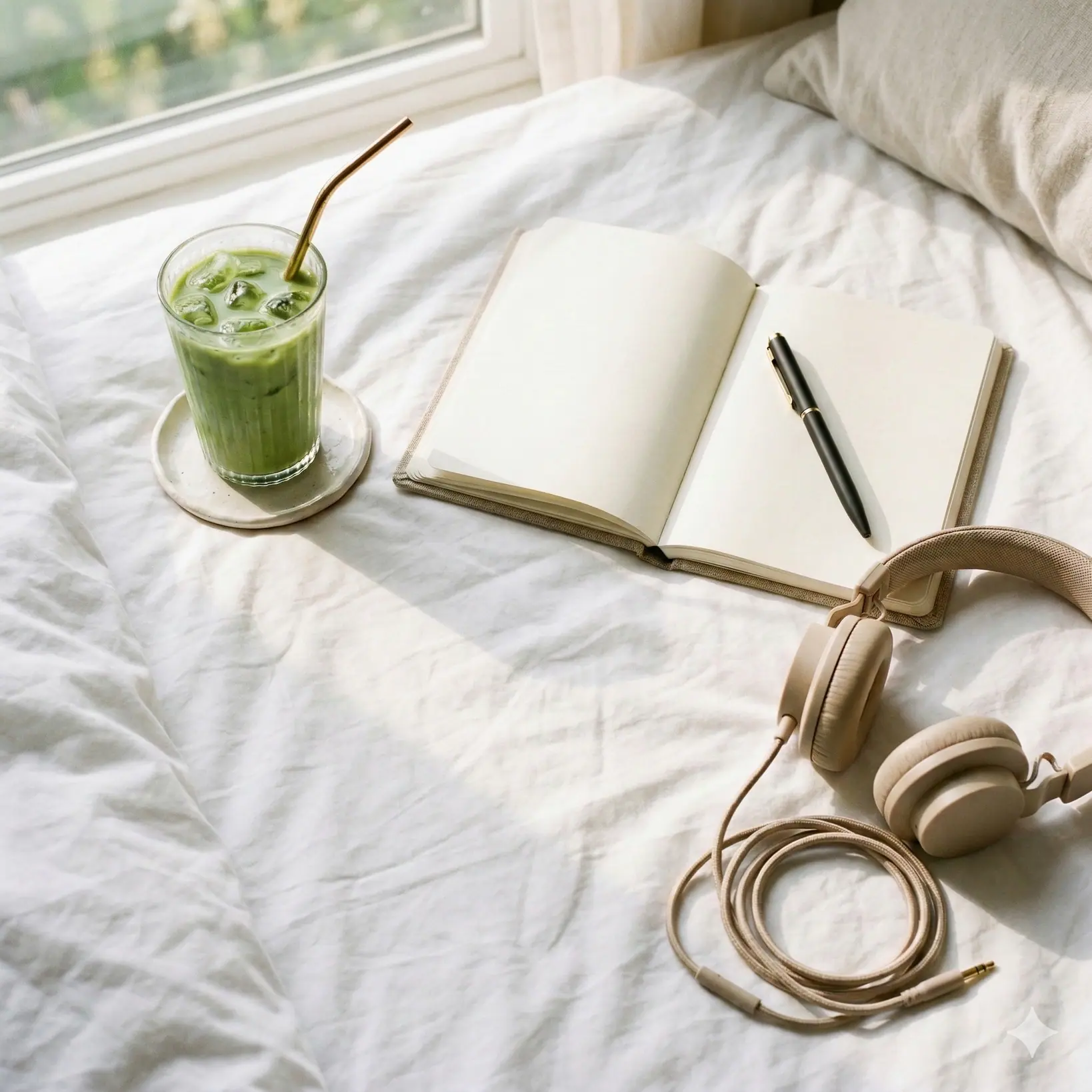
Let's be real: looking that "clean" requires a suspicious amount of effort. The "no-makeup" makeup, the "I-just-woke-up-like-this" bun that actually takes four hair gels and a precise technique—it's the pinnacle of performative ease. This taps into a deep-seated social psychology concept where appearing naturally flawless is often valued more highly than obvious labor. It's not about hiding the work; it's about making the work invisible, which in itself becomes the new standard. The aesthetic whispers of green juices, 8 hours of sleep, and morning meditations, creating an aspirational identity of holistic well-being. You're not just wearing makeup; you're signaling a lifestyle of purported balance and intentionality, whether you actually drank that celery juice or not.
3. Minimalism as a Moral Statement (And Its Hidden Baggage)
The pared-back palette of whites, creams, and beiges does more than just look expensive. It aligns with a long-held cultural association between visual simplicity and moral purity. By adopting a minimalist wardrobe and clear-skinned look, you might be unconsciously participating in a modern purity test—one that equates clutter with chaos and simplicity with virtue. Studies on consumer behavior indicate that minimalism often functions as a status symbol, signaling not just wealth but taste and self-discipline. However, this can create a subtle, exhausting pressure. When your aesthetic is defined by "less," every purchase, every item in your closet, becomes a weighted statement. The quest for clean can ironically become mentally messy, filled with guilt over that one colorful impulse buy that "ruins" the vibe.
4. The Slicked-Back Bun: Hair as Emotional Armor
Why has this specific hairstyle become the uniform's crown? Beyond practicality, pulling every strand tightly back is a powerfully symbolic act. It clears the visual field, removes distraction, and presents a smooth, unimpeachable facade. In body language, exposing the face and neck can signal confidence, but the extreme tightness can also suggest restraint and control. It's hair that says, "I am not here to play; I am here to execute." There's no hair to hide behind, no frizz to betray a moment of doubt. It transforms hair from a potential source of fuss or femininity into architectural, almost severe, framing. It turns your head into a clean canvas, prioritizing the "skincare'' glow over any whimsical style. It's the ultimate "business in the front" statement, even if your business is just running errands.
5. When "Clean" Tips Into Obsessive Ritual
There's a fine line between a soothing routine and a rigid ritual that fuels anxiety. The clean girl aesthetic is built on routines: double-cleansing, gua sha, meticulous product layering. For many, these acts are mindful, self-care anchors. However, psychology experts note that when the routine becomes a non-negotiable prerequisite for facing the day, or if skipping it causes disproportionate distress, it may be serving as a coping mechanism for underlying anxiety. The need for external order can sometimes be a response to internal disorder. If maintaining the "clean" look starts to feel less like a choice and more like a compulsory script for being acceptable, it might be time to examine the pressure you're putting on yourself. Is the aesthetic serving you, or are you serving the aesthetic?
6. The Inherent Exclusivity of a "Simple" Look
For an aesthetic that champions simplicity, its gatekeeping can be complex. The "clean" look often implicitly champions specific features—dewy skin (easier for some skin types than others), slicked hair (challenging for many textured hair types without significant chemical alteration), a slim silhouette often shown in form-fitting neutrals. This can unintentionally create a narrow standard of what "cleanliness" and wellness look like. The trend's origins and most visible ambassadors often center a very particular, affluent look that isn't accessible or even desirable for everyone. Recognizing this allows for a more inclusive interpretation: maybe your "clean" aesthetic is vibrant colors that spark joy, or embracing your natural texture, or defining wellness on your own terms beyond a skincare fridge.
7. Reclaiming "Clean" For Your Authentic Self
So, where does this leave us? The power of any aesthetic lies in what you take from it, not what it demands of you. Maybe the real psychological takeaway from the clean girl phenomenon is the universal desire for clarity, intention, and a sense of peace. Instead of copying a checklist, ask what elements truly resonate. Do you crave the ritual? Then build one that fits your life, even if it's a 2-minute routine. Do you love the feeling of an uncluttered space? Start with your phone's home screen, not your entire wardrobe. The goal isn't to achieve a flawless, static image, but to curate habits and an environment that make you feel grounded. Your aesthetic should be a tool for self-expression, not a cage. So, keep the lip oil if you love the gloss, ditch the bun if it gives you a headache, and remember that the messiest, most vibrant, most "unclean" parts of you are also worth celebrating.