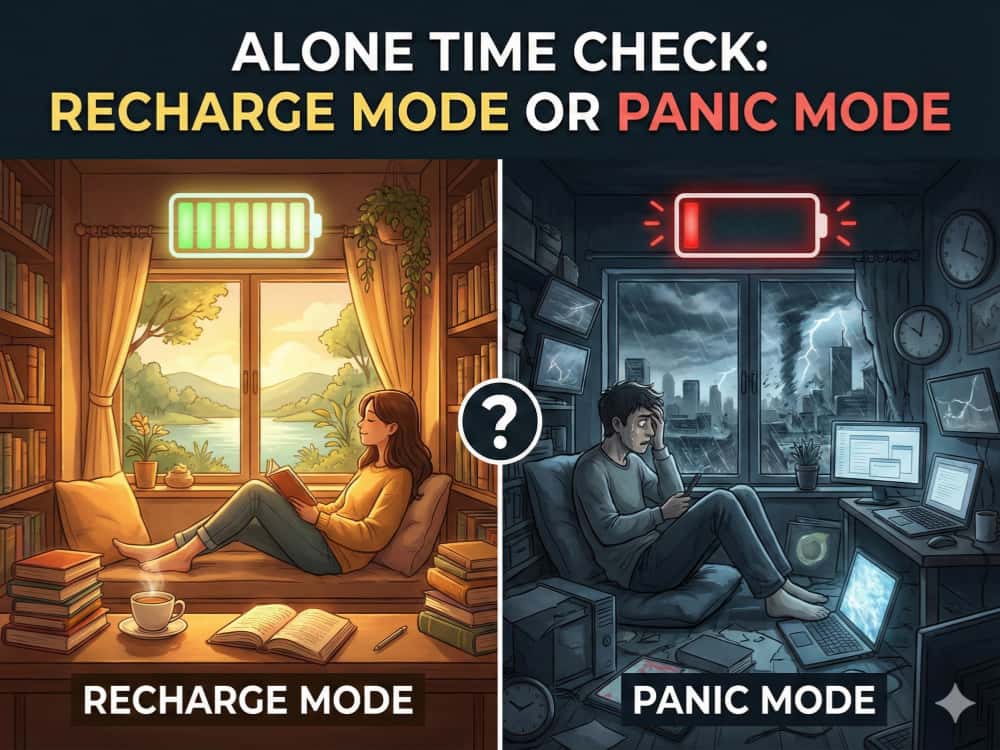


You know that feeling when the thought of one more group chat notification, one more "let's grab a drink," one more weekend packed with plans makes your soul feel like a deflated whoopee cushion? You, the person who once thrived on a full calendar, now find yourself staring at your phone with the existential dread of a hermit crab being evicted from its shell. Welcome to the paradoxical, deeply confusing state of extrovert burnout. It's the social hangover that no amount of water and greasy food can cure, where your battery isn't just low—it feels like someone stole the charger and replaced it with a glitter bomb of obligations.
The Slow Fade from Firework to Fizzle
It doesn't happen overnight. It starts subtly. Maybe you begin to "forget" to check the event you're "interested" in on Facebook. You start opting for the two-person hang instead of the rooftop party. You find yourself genuinely excited about a cancelled plan, a feeling so foreign it's like discovering a new, very quiet emotion. This isn't you becoming an introvert; research suggests it's your brain's way of waving a giant, neon "S.O.S." flag. The very social interactions that once energized you—the laughter, the connection, the collective energy—start to feel like emotional withdrawals from an account you didn't realize was overdrawn. The engine that ran on external stimulation is suddenly sputtering, choked by the very fuel it was designed to burn.
Why the Party Animal Needs to Hibernate
Here's the psychological plot twist: social exhaustion doesn't discriminate by personality type. While introverts are often better at proactively guarding their energy reserves, extroverts can be lulled into a false sense of infinite social stamina. The line between "recharging" and "draining" gets blurry. Many experts believe that for extroverts, the burnout often stems from a lack of meaningful connection amidst a sea of superficial interaction. It's the difference between a deep, one-on-one conversation that leaves you inspired and six consecutive hours of making small talk at a networking event where you can't remember anyone's name. Your brain starts to crave substance over volume, depth over breadth, and when it doesn't get it, it stages a quiet revolt.
The Guilt Trip of Saying "No"
This is where the real fun begins. The internal monologue kicks in: "But I'm the planner! If I bail, the whole thing will fall apart!" or "People will think I'm depressed or mad at them." You feel a profound sense of guilt for wanting what everyone assumes you don't need: solitude. You might even force yourself to go out, performing your own version of "Fun You" like a one-person Broadway show that's been running for too many seasons. You're there in body, smiling and nodding, but your mind is already at home, wearing sweatpants and watching a documentary about moss. This performative socializing is often the fastest route to complete relational fatigue, turning joy into a job with terrible benefits.
Recalibrating Your Social Diet
Think of it like nutritional science for your social life. You've been binge-eating empty social calories. The path out of extrovert burnout isn't to become a recluse; it's to become a connoisseur. Studies indicate that intentionality is key. Start an audit. Which interactions actually fill your cup? Which ones leave you feeling like you just licked the cup clean and are still thirsty? It might mean swapping two big group dinners for one quality coffee date. It could involve scheduling "appointments" with yourself that are as non-negotiable as any party. It's about learning to differentiate between FOMO (Fear Of Missing Out) and JOMO (Joy Of Missing Out)—and cultivating a genuine taste for the latter.
The Art of the Strategic Recharge
For the extroverted brain, total isolation might feel more like punishment than recovery. The recharge might not look like silent meditation (though it could!). It might look like a solo trip to a bustling museum, where you're surrounded by energy but not required to participate. It could be a long phone call with your best friend from childhood instead of a night out with ten acquaintances. It's about finding activities that provide stimulation without demand, engagement without expectation. It's giving yourself permission to consume social energy passively, like sunlight, rather than actively generating it like a human dynamo.
So, if you find yourself, the eternal social butterfly, wanting to cocoon for a while, don't panic. You're not broken; you're just in need of a system update. The world will still be there when you emerge, and it might just look a little brighter when you're viewing it from a fully charged battery, on your own terms.