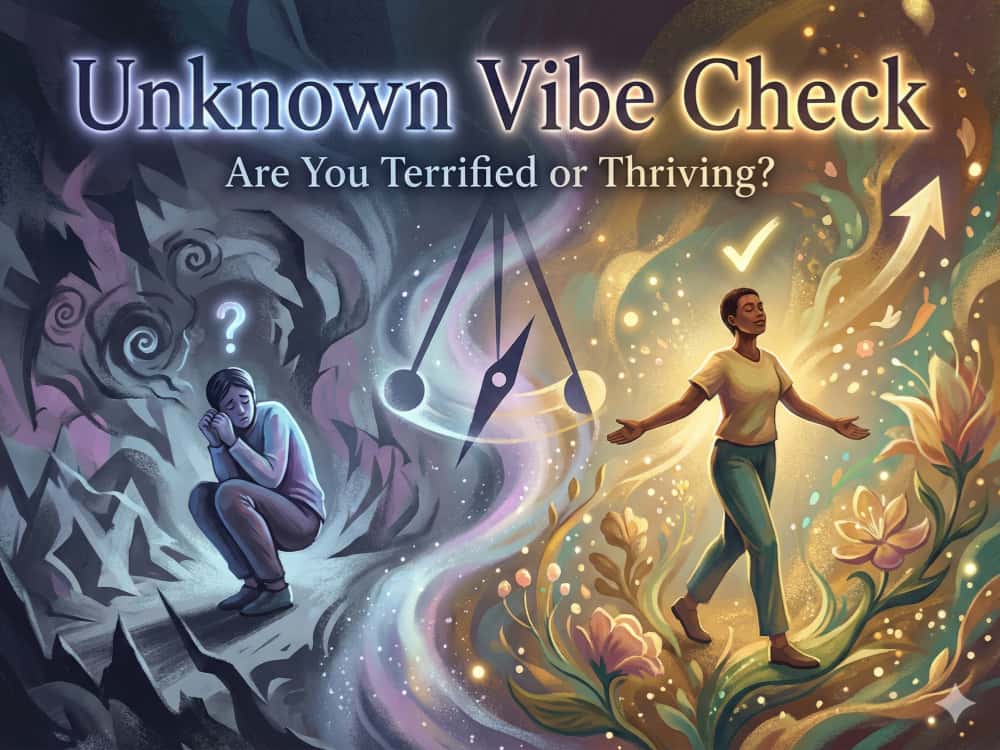
Ever feel like you're running on an emotional operating system you never agreed to download? That feeling might be tied to your childhood trauma responses. These are the automatic, often invisible, blueprints for how we react to stress, conflict, and connection, forged way back when. The good news? Understanding them is the first step toward an update. Let's unpack how these patterns form and how you can start writing new code.
The Before: Living on Autopilot
Picture this: Your boss sends a slightly ambiguous email, and your heart immediately starts racing. A friend cancels plans, and you're convinced it's because they secretly hate you. A partner asks for a quiet night alone, and you feel a cold wave of abandonment. Sound familiar? This is the "before" state—when your nervous system is essentially hijacked by old survival strategies. You're not reacting to the present moment as much as you're re-enacting a protective playbook from the past. It's exhausting, confusing, and can make you feel like a stranger to yourself.
Your Brain's Ancient Security System
So, what's actually happening under the hood? To understand trauma reactions, we need to talk about your brain's brilliant, if sometimes overzealous, security detail. When we experience chronic stress or adversity in childhood, our developing brains learn to prioritize survival above all else. Research suggests this can wire our threat-detection systems—like the amygdala—to be hyper-vigilant, constantly scanning for danger even in safe environments. Think of it like a super-sensitive smoke alarm that goes off when you toast bread. Meanwhile, the prefrontal cortex, the part responsible for rational thought and emotional regulation, can get temporarily "offline" during perceived threats. This isn't a flaw; it's an adaptation. Your system learned that reacting quickly—with fight, flight, freeze, or fawn responses—was the best way to navigate your world. The mechanism is pure evolutionary genius, but the application in your adult life? Not always so helpful.
The Four Fs: Decoding Your Default Settings
Those survival strategies often crystallize into four primary categories, sometimes called the "4 Fs." See if you recognize your go-to mode. The Fight response looks like constant readiness for conflict: irritability, controlling behavior, or a hair-trigger temper. It's the inner mantra of "I'll get you before you get me." The Flight response is all about avoidance: overworking, perfectionism, constant busyness, or fleeing from difficult conversations. The goal is to outrun the uncomfortable feeling. The Freeze response feels like shutting down: dissociation, feeling stuck, brain fog, or numbing out with scrolling or other distractions. It's the "if I don't move, maybe the threat won't see me" strategy. Finally, the Fawn response is about appeasement: excessive people-pleasing, disappearing your own needs, and struggling to say no. The unconscious belief is "if I make you happy, I'll be safe." Most of us have a blend, but one often takes the driver's seat. Recognizing your primary pattern is like finding the user manual for your own reactions.
The Bridge: From Reaction to Recognition
This is where the transformation arc begins. The shift doesn't happen by fighting your responses, but by getting curiously friendly with them. The first, most powerful step is simply to name it to tame it. Next time you feel that familiar surge of anxiety, anger, or numbness, pause. Ask yourself: "Which 'F' is showing up right now?" Is my body preparing to fight, flee, freeze, or fawn? Just labeling the response can create a tiny but crucial gap between the trigger and your reaction. In that gap, choice becomes possible. Another key move is to practice somatic awareness—noticing what's happening in your body. A clenched jaw (fight)? A restless urge to leave the room (flight)? A feeling of heaviness (freeze)? A tightness in your chest when you consider setting a boundary (fawn)? Your body holds the map of your nervous system's state. By checking in with it, you start to become the operator of your system, not just a passenger.
The After: Rewiring with Gentle Repetition
Now, let's paint the "after" picture. This isn't about erasing your past or becoming a perfectly calm robot. It's about expanding your window of tolerance and building new neural pathways. The aspirational state looks like this: Your boss's email arrives. You feel the initial ping of anxiety, but instead of spiraling, you think, "Ah, there's my old flight response. Let me breathe and ask for clarification." Your friend cancels. The old story of rejection whispers, but you counter with, "This is probably about their schedule, not their feelings for me." You feel more grounded in your relationships, not because conflict disappears, but because you trust your capacity to handle it. You start to discern real threat from perceived threat, conserving your emotional energy for what truly matters. Your past informs you, but it no longer dictates you.
Actionable Steps for Your Nervous System Toolkit
Building that "after" state takes practice. Here are a few actionable places to start. First, cultivate anchors of safety in the present. This could be a grounding exercise like the 5-4-3-2-1 technique (name 5 things you see, 4 you feel, 3 you hear, 2 you smell, 1 you taste) to bring you back to the here and now. Second, experiment with micro-boundaries. If "fawn" is your default, practice saying "Let me think about that and get back to you" instead of an automatic yes. Third, introduce corrective experiences. If you learned people are unreliable, consciously build connections with consistent, safe friends. Each positive experience is data for your nervous system, slowly teaching it that safety is possible. Remember, this work is incremental. It's less about a dramatic overhaul and more about the gentle, consistent repetition of new choices.
The Takeaway: You Are Not Your Responses
Here's the most important insight: Your childhood trauma responses are not your personality. They are adaptations—strategies that helped a younger you survive. Honoring that fact is key. You don't need to blame your past self or your caregivers. The goal is compassionate curiosity. By understanding these patterns, you reclaim agency. You begin to see that between the trigger and your reaction, there is a space. And in that space lies your power to choose something different. The journey from autopilot to authorship of your own life isn't a straight line, but every moment of awareness is a step forward. What might you discover in that space today?