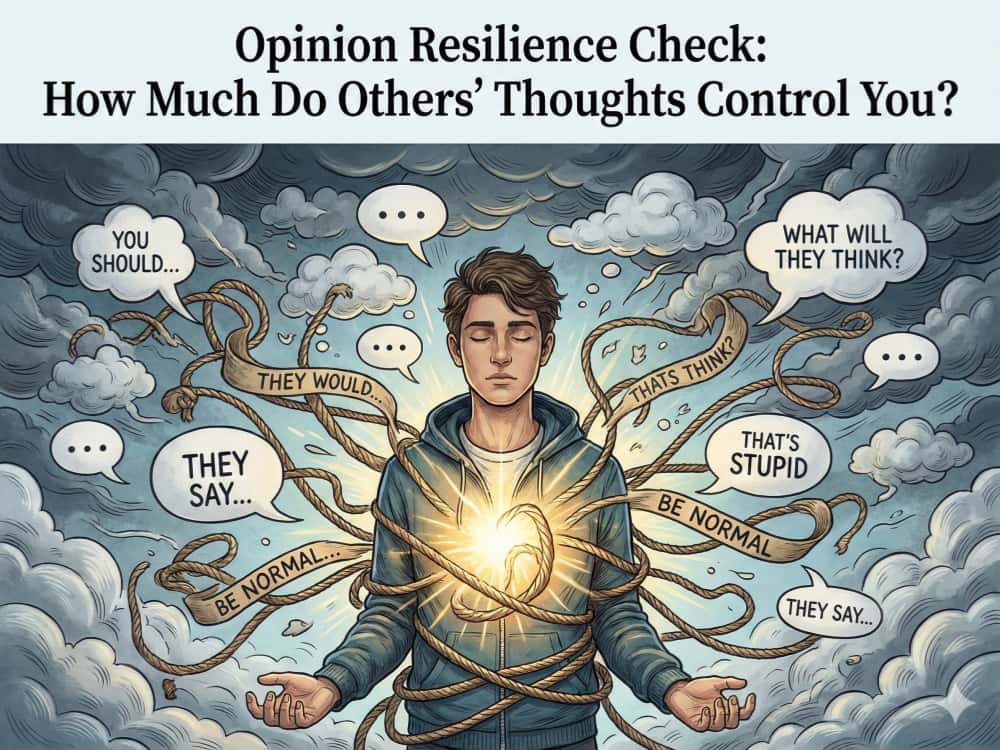
Ever found yourself stuck in a mental loop of "boy math"? You know, that internal calculus of overthinking, self-doubt, and justifying patterns that don't serve you? If you're ready to trade that mental clutter for clarity, you're in the right place. This isn't about blaming anyone; it's about understanding the psychology behind our own relational math and learning a new equation.
The Boy Math Mindset: A Relatable Starting Point
Let's paint a picture of the "before" state. It's that familiar feeling. You analyze a text message for 20 minutes, searching for hidden meaning. You convince yourself that someone's inconsistent behavior is actually a sign of deep, unspoken interest. You might downplay your own needs to fit someone else's narrative, or engage in mental gymnastics to justify why you're settling for less than you deserve. This pattern, often humorously labeled as "boy math," is really a universal experience of cognitive bias in our social and romantic lives. It's the mind's attempt to create certainty where there is none, often leading to anxiety and emotional exhaustion.
The Psychology Behind the Pattern: Your Brain's Shortcut System
Why do we do this? Research suggests our brains are wired for efficiency, not always accuracy. We use mental shortcuts called heuristics. In relationships, this can manifest as confirmation bias—seeking out information that confirms our existing fears or hopes—and narrative bias, where we create a story to explain ambiguous behavior, even if it's not based in reality. Many experts believe this stems from a desire for control and predictability in emotionally vulnerable situations. When we lack clear data, our mind fills in the blanks, and often, it uses the ink of our past experiences and insecurities. This isn't a character flaw; it's a common psychological mechanism that can be observed and, with practice, managed.
The Cost of Mental Gymnastics: Your Emotional Energy Budget
Constantly performing this internal "math" has a real toll. It drains your emotional and mental energy, leaving less for your passions, friendships, and self-care. Studies indicate that chronic overthinking and rumination can contribute to increased stress and decreased life satisfaction. It can keep you in a passive state, reacting to perceived signals rather than actively creating the connections you truly want. You might miss red flags because you're too busy explaining them away, or overlook green flags because they don't fit the dramatic narrative you've constructed. Recognizing this cost is the first step toward choosing a different path.
Action Step 1: Audit Your Internal Dialogue
The transformation begins with awareness. Start noticing your thought patterns. When you feel yourself spiraling into analysis, pause. Ask yourself: "What is the concrete evidence for this thought?" and "What is a more neutral or compassionate explanation?" Journaling can be a powerful tool here. Write down the "story" you're telling yourself, then fact-check it against the actual events, not your interpretations. This practice, often rooted in cognitive behavioral principles, helps create space between a stimulus and your reaction, weakening the grip of automatic negative or anxious thoughts.
Action Step 2: Shift from Mind-Reading to Boundary-Setting
Aspirational thinking moves away from trying to decode others and toward clarifying your own position. Instead of asking "What does this mean about them?" try asking "What does this mean for me?" and "What do I need to feel secure?" This reframes your energy from speculation to self-advocacy. Practice stating your needs clearly and calmly, without apology. For example, "I feel best when plans are confirmed the day before. Can we aim for that?" This builds relationships based on mutual respect and clear communication, not guesswork and assumption.
Action Step 3: Embrace the "And" – Holding Multiple Truths
Advanced relational intelligence involves tolerating ambiguity. This is the core of moving beyond simplistic "math." Someone can be busy AND still interested. A situation can be uncertain AND not a catastrophe. You can be disappointed by an outcome AND still respect yourself for how you handled it. This cognitive flexibility reduces the urge to force a black-and-white conclusion. It allows you to respond to what is actually happening, not just the story you're afraid of. Meditation and mindfulness practices can significantly strengthen this ability to observe without immediately judging or solving.
The After State: Clarity, Agency, and Secure Connections
Imagine the "after." Your mental energy is freed up. You engage with people from a place of curiosity, not anxiety. You trust your own perceptions and don't dismiss your needs. Relationships feel lighter because you're not carrying the invisible burden of constant interpretation. You give people the grace to be human and complex, while also holding clear standards for how you expect to be treated. This isn't about becoming cold or detached; it's about developing a secure, grounded inner foundation. From this place, your connections are chosen, not deciphered.
Your New Equation: Trust > Control
The ultimate rewrite is swapping the exhausting formula of control (analyzing + justifying + mind-reading) for the liberating practice of trust. Trust in your own judgment. Trust that you can handle uncertainty. Trust that clarity reveals itself in time, often through actions, not just words. This week, challenge one instance of your old "math." When you feel the urge to over-analyze, consciously redirect that energy. Take a walk, call a friend about something else, or engage in a hobby. Notice the difference in your emotional state. You are not your thoughts; you are the observer who gets to choose which thoughts to engage with. That is the most powerful math of all.