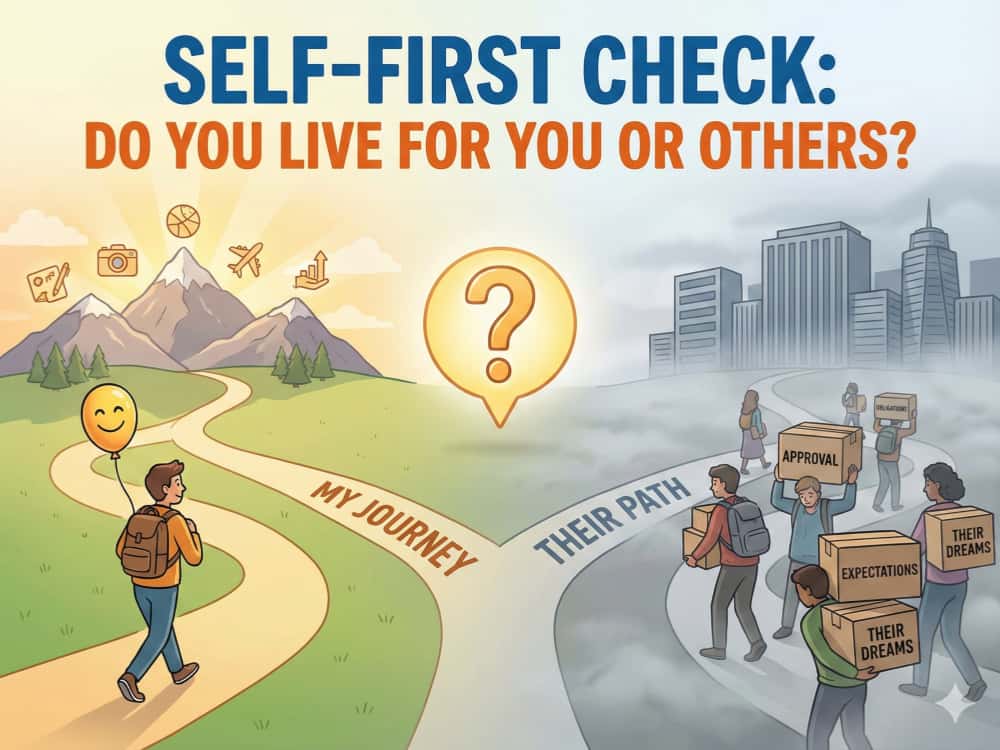
We all have that one friend who's always "on the grind," but what happens when the grind grinds you down? For a growing number of us, the answer is becoming a hustle culture dropout. This isn't about laziness; it's a quiet rebellion against a system that equates self-worth with productivity, and it might be one of the healthiest psychological shifts of our generation.
The Burnout Wasn't a Bug, It Was a Feature
For years, we treated exhaustion like a badge of honor. The 5 AM wake-ups, the side-hustles, the glorification of "no days off"—it was the soundtrack to our ambition. But research suggests this constant state of striving activates our sympathetic nervous system, keeping us in a prolonged "fight or flight" mode. It's like revving a car engine 24/7 and wondering why it eventually seizes. The fatigue, the cynicism, the feeling of inefficacy that defines burnout wasn't a personal failure; for many, it was the inevitable outcome of a unsustainable lifestyle. Stepping away from that cycle isn't quitting. It's a necessary system reboot.
Rediscovering the "Why" Behind the Work
Hustle culture often inverts a fundamental psychological principle. Instead of work serving our lives, our lives begin to serve the work. The act of stepping off the productivity treadmill forces a profound re-evaluation. What are we working for? Who are we outside of our output? Studies on self-concept clarity indicate that when our identity is overly fused with our job title or hustle, any setback feels like a personal catastrophe. Creating space allows us to untangle our "self" from our "to-do list." It lets us ask if we're climbing a ladder because we want to reach the top, or simply because we're afraid of what will happen if we stop climbing.
The Quiet Power of Strategic Disengagement
There's a misconception that rejecting hustle culture means embracing idleness. In reality, it's about intentional engagement. It's the difference between mindlessly scrolling for "inspiration" at midnight and protecting sleep because you know cognitive function depends on it. It's saying "no" to a late-night request to preserve time for a hobby that actually restores you. This isn't passive; it's an active, deliberate curation of your energy and attention. Think of it as moving from a shotgun approach to life—trying to hit everything—to the precision of a sniper, focusing only on what truly matters.
When Your Nervous System Says "Enough"
Our bodies have a wisdom that our ambition often overrides. The constant pressure to optimize every hour can trigger a low-grade, chronic stress response. Over time, this can manifest not just as anxiety, but as a kind of emotional numbness—a feeling of being disconnected from joy, even in moments of "success." For many would-be hustle culture dropouts, the final straw isn't a logical decision, but a somatic one. The body simply refuses to cooperate anymore. Listening to that signal isn't weakness; it's a critical form of self-preservation. It's the system's fail-safe kicking in.
Building an Identity That Isn't for Sale
The most liberating part of leaving the hustle behind is the reconstruction phase. Without the ready-made identity of "the hustler," who are you? This can be terrifying, but also incredibly fertile ground. It's a chance to define success by internal metrics—curiosity, connection, creativity, calm—rather than external validation and metrics. You might reconnect with an old interest not because it could "monetize well," but because it makes you lose track of time. You might prioritize relationships that are nourishing rather than merely "strategic." This process of redefining personal success is slow, non-linear, and deeply personal, which is exactly why it's so authentic.
The New Frontier: Sustainable Passion
So, what comes after the dropout? It's not a void. For many, it's the discovery of a slower, more sustainable kind of passion. Work doesn't disappear, but its role changes. It becomes a channel for expression and contribution, not the sole source of your identity. You might work just as hard on a project you care about, but the energy comes from a place of alignment, not fear of falling behind. The drive is intrinsic, not fueled by comparison. This shift from a scarcity mindset ("I must out-hustle everyone") to a sufficiency mindset ("I have enough, I am enough") is, according to many wellness experts, the cornerstone of long-term well-being.
Becoming a hustle culture dropout isn't an ending. It's the beginning of a more honest conversation with yourself. It's trading the loud, frantic noise of "more" for the quiet, steady signal of what truly matters. It's realizing that the most radical act of productivity might just be giving yourself permission to be a human being, not a human doing. The path forward isn't paved with hustle; it's built moment by moment, with intention, rest, and the courage to define success on your own terms.