Let's be brutally honest for a second: our collective obsession with face symmetry is a cultural neurosis masquerading as science. We've been sold a bill of goods that the "perfect" face is a mathematically balanced one, and we're all secretly measuring our self-worth against a ruler we didn't consent to. This opening salvo isn't about denying what research suggests; it's about questioning why we've let a single, cold metric of facial proportions hijack our perception of warmth, character, and allure. The truth is, the most captivating faces often break the rules, and our brains are far more sophisticated than a simple symmetry detector.
The Symmetry Bias: Your Brain on Autopilot
Okay, fine, let's address the elephant in the room. Many studies indicate that, on a primal, split-second level, humans often show a slight preference for more symmetrical facial features. Evolutionary psychology theories suggest this might be a subconscious cue for health and genetic fitness. But here's the hot take: that initial blink-of-an-eye reaction is about as meaningful as judging a book by its font. It's a neurological shortcut, not a final verdict. We're conflating a basic, instinctive flicker with deep, lasting attraction or respect. It's like your brain's spam filter—it sorts quickly, but you're the one who decides what's worth reading. By fixating on this one aspect of facial structure, we're letting the most primitive part of our psychology do all the talking, ignoring the complex symphony of expression, animation, and character that actually builds connection.
Character > Coordinates: Why "Flaws" Fascinate
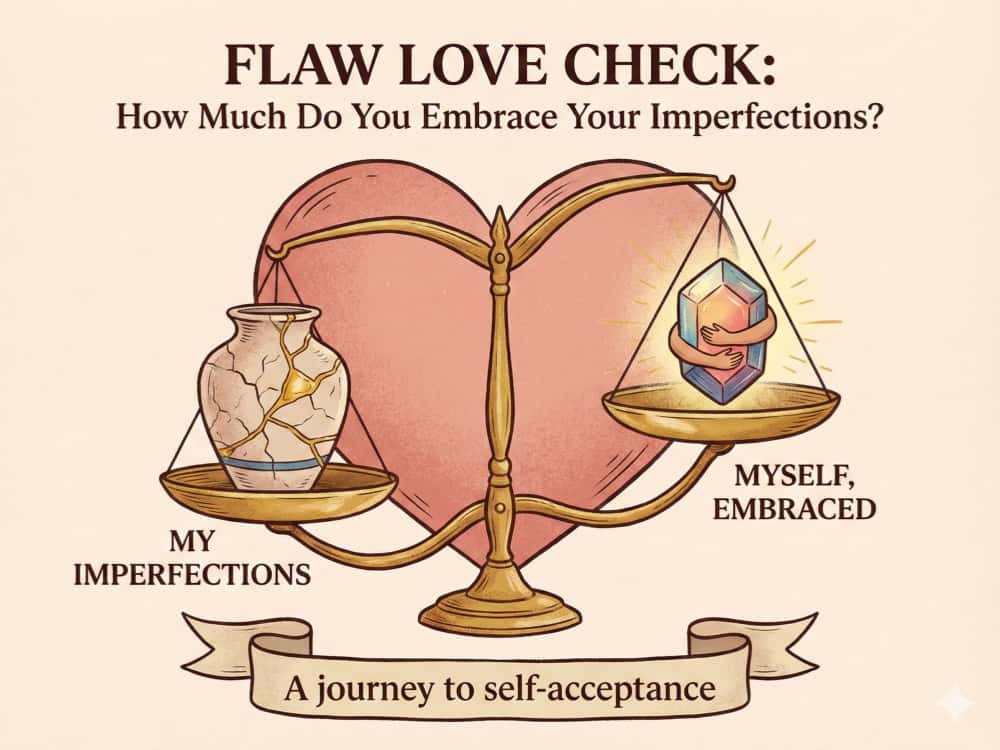
Think of the most memorable faces in film, art, or your own life. Are they textbook examples of perfect bilateral balance? Unlikely. They're the faces with the interesting arch of an eyebrow, the distinctive curve of a smile that's slightly stronger on one side, the eyes that aren't perfectly level but sparkle with specific intelligence. These "imperfections" are visual punctuation marks; they create rhythm, interest, and narrative. A perfectly symmetrical face can risk being forgettable—it's a closed equation. An asymmetrical face is a story. Psychological research into person perception tells us that distinctive features enhance memorability and are often associated with perceived uniqueness and strength of personality. We don't fall for a geometry problem; we connect with a person whose features have been shaped by experience, emotion, and life—things that are, by nature, beautifully unbalanced.
The Mirror’s Misdirection: When Self-Scrutiny Lies
Our modern curse is the high-resolution selfie camera and the endless mirror gaze. This hyper-focused, static view amplifies minor asymmetries to monstrous proportions in our own minds. We're studying a frozen, flattened map of our face instead of experiencing the dynamic territory of how we actually look and interact in the world. Experts in body image psychology point out that this static scrutiny fuels distortion. In motion, when we talk, laugh, and listen, those asymmetries dissolve into expressiveness. The slight crook in a smile becomes charm. The uneven crinkle of an eye becomes warmth. The quest for perfect facial harmony is often a quest for a static, inanimate ideal, while human attraction and rapport are fundamentally about movement, reaction, and animation. You are not a portrait; you're a film.
Beyond the Blueprint: What We Actually Respond To
If facial balance were the ultimate key, dating apps would just be symmetry scanners. They're not, because we intuitively seek so much more. Psychological studies consistently highlight that traits like perceived kindness (often from eye crinkles and smile lines), confidence (conveyed through expression and posture), and vitality (shown through skin texture and eye brightness) massively outweigh minor deviations in facial proportions in determining attraction and trust. We are wired to read emotion and intention, not just structure. A "less symmetrical" face radiating genuine joy is universally more attractive than a "perfect" one wearing a mask of neutrality or disdain. Our brains are integrating a million data points—tone of voice, body language, micro-expressions—and reducing all that to "was their nose perfectly centered?" is a tragic oversimplification of human psychology.
Reclaiming Your Gaze: An Actionable Reframe
So, what's the empowering takeaway? It's time to audit your gaze. The next time you catch yourself mentally measuring your own or someone else's facial proportions, pause. Shift the metric. Ask better questions: Does this face look alive? Kind? Interesting? What does the expression communicate? This isn't about denying the reality of facial aesthetics, but about expanding its definition far beyond a sterile balance sheet. Your face is not a bug to be fixed; it's the unique interface for your humanity. Its so-called imbalances are likely the very features that make you recognizable, expressive, and real. Let's retire the internal symmetry police and start appreciating the complex, asymmetrical, and utterly fascinating art of the human face.