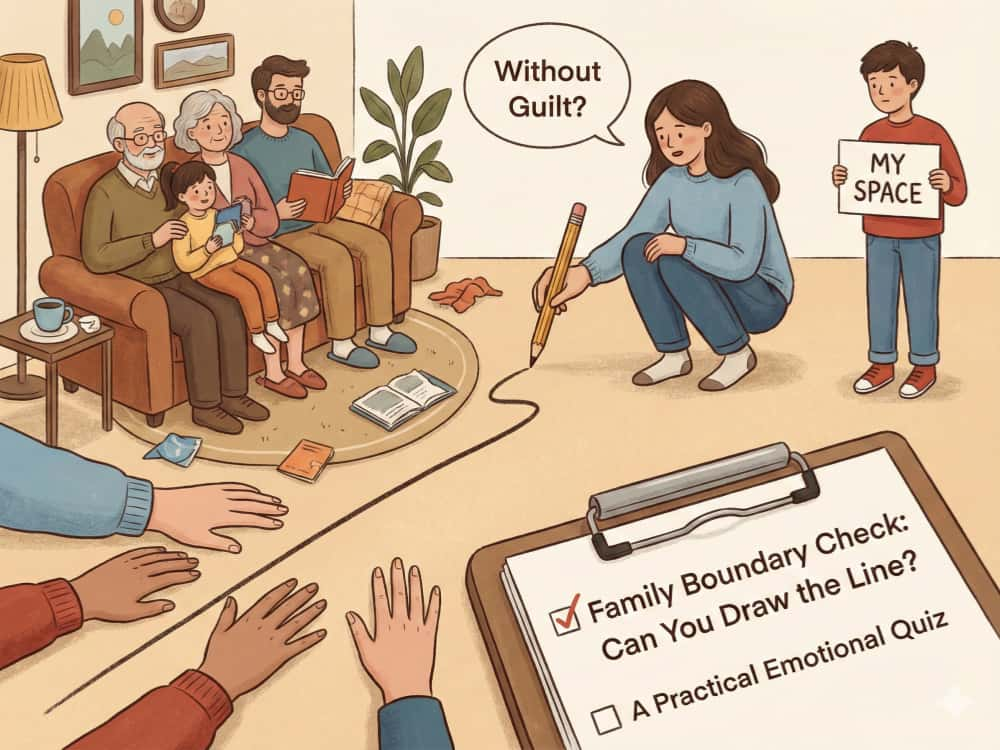
You've heard the buzzword, maybe even felt the pull. Quiet quitting isn't about leaving your job; it's about mentally checking out, doing only what's in your job description, and reclaiming your time. But what's really happening in your brain when you decide to stop going "above and beyond"? This isn't just a workplace trend; it's a complex psychological shift with roots in motivation, boundaries, and self-preservation. Let's explore the hidden drivers behind this act of professional disengagement.
Why do I feel guilty for just doing my job?
This guilt is a powerful psychological signal, often rooted in what experts call "hustle culture" conditioning. For years, the narrative has been that success requires relentless extra effort—staying late, answering emails at midnight, always saying yes. When you step off that treadmill, your internal alarm system, shaped by those expectations, goes off. Research suggests this guilt can be a form of "cognitive dissonance"; your actions (setting boundaries) conflict with your deeply ingrained beliefs (that you must always do more). It's like the mental equivalent of phantom limb pain—you feel discomfort where a pressured expectation used to be. Furthermore, many workplaces implicitly reward overwork, making adequate performance feel like underperformance. Recognizing this guilt as a learned response, not a true moral failing, is the first step in understanding your relationship with work.
Is quiet quitting a sign of burnout or a cure for it?
It can be both a symptom and a strategy, a psychological paradox. For many, this form of work disengagement is a direct reaction to burnout—the emotional, physical, and mental exhaustion caused by prolonged stress and overinvestment. When you're burned out, your brain's resources are depleted; pulling back is a self-protective instinct, like a circuit breaker tripping to prevent a fire. In this sense, quiet quitting is a consequence. However, when enacted consciously as a way to establish firmer boundaries between work and life, it can function as a preventative measure. By mentally decoupling your self-worth from your productivity and strictly defining your professional contribution, you may protect your psychological energy. The key distinction lies in agency: is it a passive slide into detachment or an active choice to rebalance? One may deepen disengagement, while the other can foster sustainable engagement.
Why does setting boundaries at work feel so risky?
Because on a primal level, it is. While you're not facing a literal predator, your brain's threat-detection system (the amygdala) can interpret social and professional risks similarly. Saying "no" or stopping extra tasks can trigger fears of social rejection, loss of status, or job insecurity—all modern versions of tribal exclusion. This is why the act of coasting or withholding discretionary effort can cause anxiety. Psychologically, we are wired for connection and contribution to our "tribe" (the team). Setting boundaries feels like breaking a social contract, activating a stress response. Furthermore, in ambiguous environments where job security isn't clear-cut, this risk feels magnified. Understanding this can help you see the feeling not as weakness, but as a natural, if overly sensitive, alarm system reacting to perceived threats to your belonging and safety.
Can my personality type make me more prone to quiet quitting?
While anyone can experience this dynamic, certain personality traits might influence how you approach work and its disappointments. For instance, individuals with high levels of agreeableness and conscientiousness often invest deeply initially but may be more susceptible to disillusionment if they feel their efforts are chronically unrecognized or exploited—leading to a sharper pullback. Think of it like a rubber band stretched too far. Conversely, those with a more pragmatic or detached baseline might set boundaries earlier. It's less about a specific personality "causing" the behavior and more about how your innate traits interact with your work environment. A highly conscientious person in a supportive role may thrive, while the same person in a toxic role may experience a more dramatic shift toward disengagement as a protective measure. It's the interaction between person and place that often lights the fuse.
How do I know if I'm quietly quitting or just working smarter?
This is the crucial question, and the answer lies in your internal state, not just your output. Quiet quitting is characterized by emotional and cognitive withdrawal—a sense of cynicism, detachment, and a loss of personal investment. You're not just doing your job; you're mentally checking out of it. "Working smarter," on the other hand, involves strategic prioritization and boundary-setting *from a place of engaged choice*. The difference is in the energy: one is powered by depletion and resentment, the other by clarity and preservation. Ask yourself: Am I redirecting my energy toward other life domains with a sense of purpose, or am I just numbing out? Am I protecting my well-being to sustain my performance, or have I given up on performance altogether? The line between healthy boundary and harmful disengagement is drawn by your intention and your overall sense of vitality.
Ultimately, the phenomenon of quiet quitting serves as a powerful mirror, reflecting our collective renegotiation of work's place in our lives. It challenges the notion that our value is synonymous with our output and highlights the human need for autonomy and respect. Whether it manifests as a stopgap for burnout or a new philosophy of work, it invites a deeper inquiry: What do you need to feel sustainably engaged, and what are you truly willing to give? The answer isn't found in simply doing more or doing less, but in aligning your effort with a sense of purpose and personal integrity that doesn't require you to quietly quit on yourself.